Supporting young children at every stage of their development
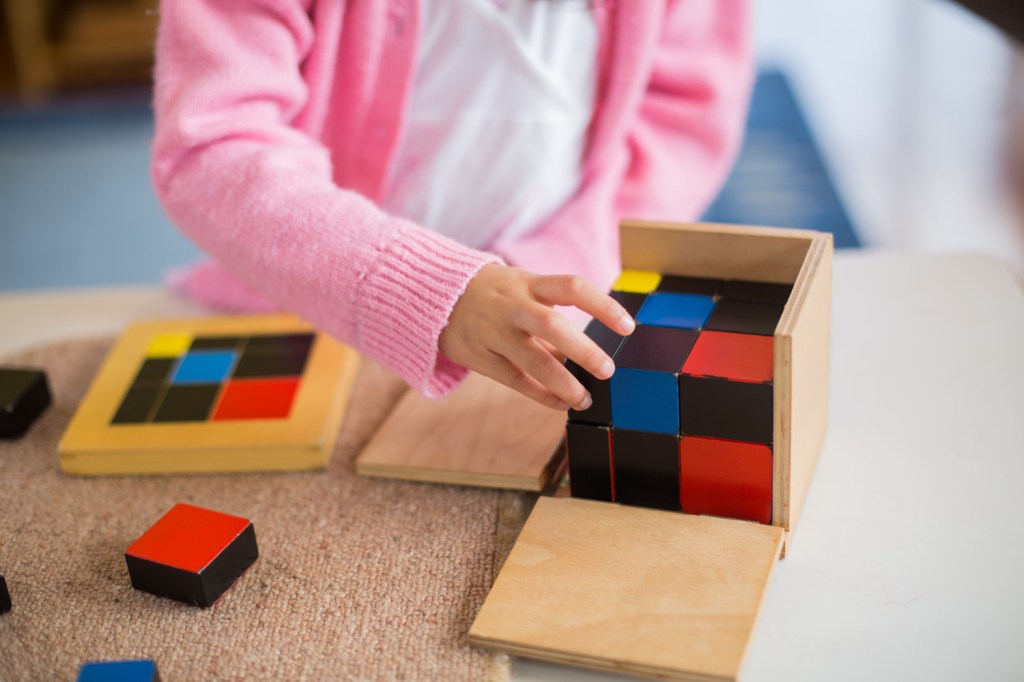
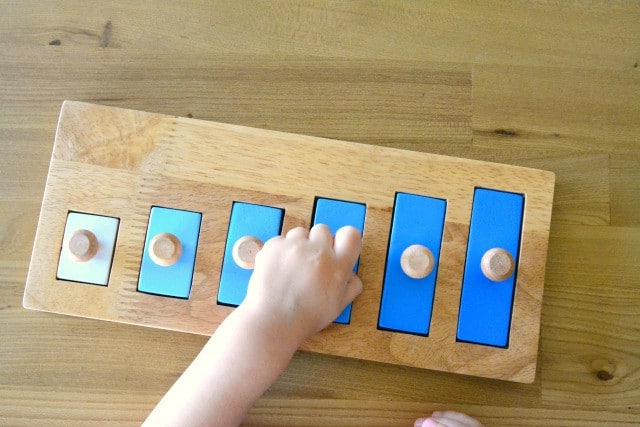
The children are encouraged to engage in the key elements of the Montessori curriculum by self educating, Modern Montessori Methods encourage them to explore this world in a carefully-prepared learning environment that responds to their need to learn and grow by exposing them to materials and experiences that stimulate intelligence and promote physical and psychological development. They are encouraged to utilize the learning materials through individual instruction, to allow children to learn at their own pace. Lessons are short, concise, direct and aimed at enhancing the child’s self-worth.
Program Features
Math
Montessori math starts with concrete learning. For instance, in arithmetic, students learn the names of the numbers by identifying numerals and objects. They then move on to more abstract and complex concepts. The content for math is divided into categories that allow students to grasp increasingly challenging concepts; one on one lessons cover these categories in a special order. Math work is done independently or in groups and the pace of study varies between students.
Reading
In the Montessori reading curriculum, teachers take advantage of the sensitive period for reading—between the ages of three and five—during which children are more able to learn how to read. Children first learn to read (and write) through concrete material and sensory activities. For instance, students trace sandpaper letters and learn their phonetic sound as opposed to only learning the name of the letter. Children learn how to correctly hold a pencil and control its use; developing their fine motor skills and learning through various senses.
Science
Students are rarely taught scientific subjects on their own. Instead, Montessori science interdisciplinary focus: students learn several subjects (scientific and non-scientific) at once. For instance, they might be given a great lesson about the beginning of the world where they’ll learn about science, history, and theology.
Writing
Montessori writing, like reading and math, isn’t taught by direct instruction. The focus is on practicing writing and doing engaging exercises. This resembles the process approach to writing instruction and is unlike the systematic approach. Children first work with moveable alphabets. They then learn how to hold a pencil, practice different strokes, and learn about pencil pressure. This improves their fine-motor skills and builds up their finger and hand muscles.
Language
In the language area of the classroom, vocabulary is enriched in many ways. Precise names are used for all objects. Object classification and matching exercises are also used to improve comprehension and vocabulary.
School hours
- Full-day program (9:00am–5:30pm)
- Designated drop-off and pickup zones
Maria Montessori’s view on the learning child sees not so much the task of filling the mind with information, but rather of constructing the mind through activity according to inner directives and urges
Dr. Peter Gebhardt-Seele


 Genius Education Academy
One thought on “Montessori Program”
Comments are closed.